California Dealer License: Complete Guide for 2026
California is the largest automotive market in the United States, with over 35 million registered vehicles and thousands of dealerships operating across the state. If you’re looking to obtain a California dealer license, you’re entering one of the most lucrative—but also most regulated—markets in the country. The California Department of Motor Vehicles (CA DMV) enforces strict requirements that go beyond what most other states demand, making proper preparation essential for a successful application.
Whether you want to open a retail car lot in Los Angeles, run a wholesale operation in the Bay Area, or start a specialty vehicle business in San Diego, this comprehensive guide covers everything you need to know about getting your dealer license in California in 2026. We’ll walk you through the exact requirements, costs, application steps, and timelines so you can navigate the process with confidence.
California Dealer License Requirements
The California DMV has specific requirements that every applicant must meet before they can receive a California car dealer license. These requirements are outlined in the California Vehicle Code (CVC), primarily Sections 11700-11740, and are enforced by the DMV’s Occupational Licensing division.
Basic Eligibility Requirements
- Age: You must be at least 18 years old
- Legal Status: Must be a U.S. citizen, permanent resident, or have a valid work authorization
- Criminal Background: No felony convictions related to vehicle theft, fraud, or similar offenses within the past 10 years. Misdemeanor convictions may be reviewed on a case-by-case basis
- Business Entity: Must have a registered business entity (LLC, Corporation, or Sole Proprietorship) with the California Secretary of State
- No Outstanding DMV Issues: Cannot have had a dealer license revoked in the past 5 years
- Business Location: Must have an established place of business that meets California’s strict location requirements
California-Specific Additional Requirements
Unlike many states, California requires additional qualifications including:
- Completion of a dealer education program (pre-licensing education)
- A $50,000 dealer surety bond (one of the highest in the nation)
- Garage liability insurance with minimum coverage limits
- A permanent business location with specific signage, display, and office requirements
- Fingerprinting and a Live Scan background check through the California DOJ
California’s regulations are designed to protect consumers in the nation’s largest car market. Meeting these requirements demonstrates your commitment to operating a legitimate and professional dealership.
How Much Does a California Dealer License Cost?
Getting a California dealer license involves several costs that add up significantly. California is one of the more expensive states for dealer licensing, primarily because of the high bond requirement and mandatory insurance. Here’s a complete breakdown of what you’ll need to budget:
DMV Application and License Fees
| Fee Type |
Cost |
| Original Dealer License Application Fee |
$200 |
| Autobroker’s Endorsement (if applicable) |
$100 |
| License Renewal Fee (annual) |
$200 |
| Dealer Plate Fee (per plate) |
$87 |
| Special Plates Fee |
$87 per set |
Bond and Insurance Costs
| Requirement |
Estimated Annual Cost |
| $50,000 Surety Bond |
$500–$5,000/year (credit-dependent) |
| Garage Liability Insurance |
$2,500–$6,000/year |
| General Business Liability |
$1,200–$3,000/year |
| Workers’ Compensation (if employees) |
Varies |
Additional Startup Costs
| Item |
Estimated Cost |
| Pre-Licensing Education Course |
$200–$500 |
| Business Entity Filing (LLC/Corp) |
$70–$800 |
| City Business License |
$50–$500 |
| Zoning Compliance/CUP (if needed) |
$500–$5,000 |
| Signage Requirements |
$200–$2,000 |
| Office Setup |
$1,000–$5,000 |
| Live Scan Fingerprinting |
$50–$100 |
Total estimated startup cost for a California dealer license: $5,000–$25,000+ depending on your location, credit score, and business type.
For a more detailed analysis of dealer license costs across all states, see our Dealer License Cost Guide.
Types of California Dealer Licenses
California offers several types of dealer licenses depending on the kind of vehicles you plan to sell and your business model. Understanding which CA dealer license type you need is crucial before starting your application.
Retail Dealer (New and Used Vehicle Dealer)
A retail dealer license allows you to sell vehicles directly to consumers. This is the most common type of California dealer license and comes in two varieties:
- New Vehicle Dealer: Requires a franchise agreement with a manufacturer. Must meet the manufacturer’s facility requirements in addition to DMV standards.
- Used Vehicle Dealer: Allows you to buy and sell used vehicles to the public. This is the most popular license type for independent dealers and entrepreneurs.
Wholesale Dealer
A wholesale dealer license permits you to buy and sell vehicles exclusively to other licensed dealers. Key benefits include:
- Lower overhead costs (no retail display requirements)
- Access to dealer-only auctions like Manheim, ADESA, and Copart
- Simplified business location requirements compared to retail
- Cannot sell vehicles to the general public
Vehicle Dismantler
This license is for businesses that disassemble vehicles for parts or scrap. California has strict environmental regulations for dismantlers, including:
- Compliance with California EPA requirements
- Proper hazardous waste disposal procedures
- Additional local environmental permits
- Specific lot size and storage requirements
Other License Types
- Motorcycle Dealer: Specific to motorcycle sales
- Trailer/RV Dealer: For recreational vehicles and trailers
- Autobroker: Acts as an intermediary between buyers and dealerships (requires a separate endorsement)
- Lessor-Retailer: For businesses primarily engaged in vehicle leasing
California Dealer License Application Process
The California dealer license application process involves multiple steps and coordination between several agencies. Here’s the exact step-by-step process to follow in 2026:
Step 1: Complete Pre-Licensing Education
Before you can apply, California requires completion of an approved dealer education program. The course covers California Vehicle Code, DMV regulations, consumer protection laws, and proper business practices. Several DMV-approved providers offer this course both in-person and online.
Step 2: Establish Your Business Entity
Register your business with the California Secretary of State. Most applicants choose an LLC or Corporation for liability protection. You’ll need:
- Articles of Organization (LLC) or Articles of Incorporation
- An EIN (Employer Identification Number) from the IRS
- A California Seller’s Permit from the Board of Equalization
- A city business license from your local municipality
Step 3: Secure Your Business Location
Find and secure a location that meets all California DMV requirements (detailed in the Business Location Requirements section below). Have a signed lease or proof of ownership ready.
Step 4: Obtain Your Dealer Bond
Purchase your $50,000 California dealer surety bond from a licensed surety company. The bond must name the California DMV as the obligee.
Step 5: Secure Insurance Coverage
Obtain garage liability insurance meeting California’s minimum requirements. Your insurance company must provide an OL 315 form (Certificate of Garage Liability Insurance) directly to the DMV.
Step 6: Complete Live Scan Fingerprinting
Visit an authorized Live Scan service provider for fingerprinting. Results are submitted electronically to the California Department of Justice for a criminal background check. All owners, partners, and corporate officers must be fingerprinted.
Step 7: Submit Your Application
Complete and submit the following forms to the DMV Occupational Licensing office:
- OL 200: Application for Original Occupational License
- OL 201: Supplemental Application (for each owner/partner/officer)
- OL 315: Certificate of Garage Liability Insurance
- OL 400: Evidence of Surety Bond
- Copy of business lease/ownership documents
- Photos of your business location (exterior signage, office, display area)
- Live Scan receipt
Step 8: Pass the DMV Inspection
A DMV investigator will schedule an on-site inspection of your business location. They’ll verify that your premises meet all requirements including proper signage, office space, display area, and business hours posting.
Step 9: Receive Your License
Once approved, you’ll receive your dealer license certificate and can order your dealer plates. You’re now authorized to operate as a licensed dealer in California.
For a complete overview of the application process that applies across all states, visit our Dealer License Application Guide.
California Business Location Requirements
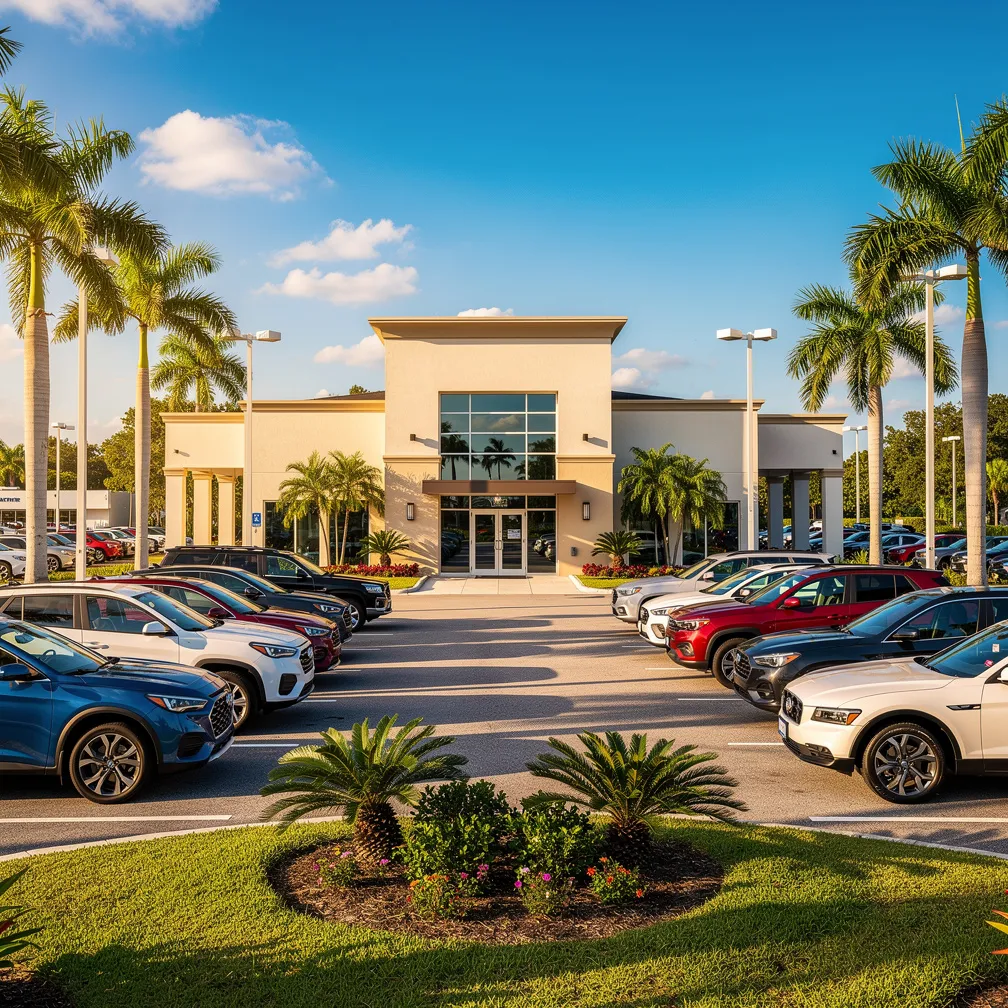
One of the most challenging aspects of obtaining a California dealer license is meeting the state’s strict “established place of business” requirements. California Vehicle Code Section 11709 defines exactly what your dealership location must include:
Mandatory Location Requirements
- Permanent Structure: Must have a permanent enclosed building (not a tent, trailer, or temporary structure)
- Office Space: A dedicated office area with a desk, chairs, computer, filing cabinet, and telephone with a published local number
- Signage: A permanently mounted sign with your dealership name visible from the street. Letters must be at least 6 inches tall on contrasting background
- Display Area: Paved or hard-surfaced area for vehicle display (retail dealers). Must accommodate a minimum number of vehicles depending on your license type
- Business Hours: Must be open to the public a minimum number of hours per week and post business hours on the building
- Restroom Access: Must have customer restroom facilities
- Zoning Compliance: Location must be properly zoned for automobile sales by your city or county. This often requires a Conditional Use Permit (CUP)
Zoning Challenges in California
Zoning is often the biggest hurdle for new dealers in California. Many California cities have strict zoning ordinances that limit where car dealerships can operate. Key considerations:
- Most residential areas are completely off-limits
- Many commercial zones require a CUP for vehicle sales
- Some cities have moratoriums on new dealership licenses
- Environmental impact studies may be required in certain jurisdictions
- Contact your local planning department BEFORE signing a lease
Wholesale vs. Retail Location Requirements
Wholesale dealers have somewhat reduced location requirements compared to retail dealers. While you still need a permanent office and proper signage, the vehicle display area requirements are less stringent since wholesale dealers don’t sell to the public.
California Dealer Bond Requirements
California requires all motor vehicle dealers to maintain a $50,000 surety bond—one of the highest dealer bond requirements in the entire United States. This bond protects consumers who may suffer financial loss due to a dealer’s fraudulent or illegal activities.
Understanding the $50,000 Bond
The bond amount of $50,000 does not mean you pay $50,000 out of pocket. Instead, you pay an annual premium to a surety company, typically between 1% and 10% of the bond amount based on your personal credit score:
- Excellent Credit (720+): $500–$1,000/year
- Good Credit (660–719): $1,000–$2,500/year
- Fair Credit (600–659): $2,500–$3,500/year
- Poor Credit (below 600): $3,500–$5,000/year
Bond Requirements and Rules
- The bond must be maintained continuously throughout your license period
- If the bond lapses, your license is automatically suspended
- The bond must be issued by a surety company authorized to do business in California
- Claims against your bond can be made by consumers who suffer financial loss due to your actions
- If a claim is paid, you must reimburse the surety company for the full amount
How to Get Your California Dealer Bond
Several surety companies specialize in California dealer bonds. To get the best rate:
- Check your credit score before applying
- Compare quotes from at least 3-5 surety providers
- Look for companies specializing in motor vehicle dealer bonds
- Consider working with a bond broker who can shop multiple carriers
- Ask about payment plans—many sureties offer monthly or quarterly payments
Insurance Requirements for California Dealers
California has mandatory insurance requirements for all licensed motor vehicle dealers. Without proper insurance documentation, the DMV will not process your California dealer license application.
Garage Liability Insurance (Required)
All California dealers must carry Garage Liability Insurance, which covers:
- Bodily Injury: Minimum $35,000 per person / $70,000 per occurrence
- Property Damage: Minimum $10,000 per occurrence
- Customer Vehicles: Coverage for vehicles in your care, custody, and control
The insurance company must file form OL 315 directly with the California DMV as proof of coverage.
Recommended Additional Coverage
- Dealers Open Lot (Physical Damage): Covers damage to your inventory from fire, theft, vandalism, weather, etc. Highly recommended for retail dealers with inventory on the lot.
- General Liability: Covers slip-and-fall and other premises-related claims
- Workers’ Compensation: Required by California law if you have any employees
- Errors & Omissions: Covers mistakes in paperwork, contract errors, and misrepresentation claims
- Cyber Liability: Protects customer data (increasingly important for compliance with the California Consumer Privacy Act)
Insurance Cost Factors
Your insurance premiums in California depend on:
- Your location (urban areas like LA and SF cost more)
- Number of vehicles on your lot
- Annual gross sales volume
- Claims history
- Number of employees
- Types of vehicles sold
California Dealer Education Requirements
As of 2026, California requires all new dealer applicants to complete a pre-licensing dealer education course. This requirement ensures that new dealers understand their legal obligations and can operate in compliance with California law.
What the Course Covers
- California Vehicle Code requirements for dealers
- DMV regulations and compliance obligations
- Consumer protection laws (including the California Car Buyer’s Bill of Rights)
- Advertising rules and regulations
- Proper vehicle documentation and title handling
- Lemon Law obligations
- Smog certification requirements
- Sales tax collection and reporting
Course Providers and Format
The California DMV maintains a list of approved education providers. Courses are available:
- Online: Self-paced programs typically taking 6-12 hours
- In-Person: One or two-day classroom courses at various locations throughout California
Upon completion, you’ll receive a certificate that must be submitted with your dealer license application. The certificate is typically valid for 1-2 years.
How Long Does It Take to Get Licensed in California?
The timeline for obtaining a California dealer license varies depending on several factors, but you should plan for a total process of approximately 8 to 16 weeks from start to finish.
Timeline Breakdown
| Step |
Estimated Time |
| Pre-licensing education |
1–2 weeks |
| Business entity formation |
1–3 weeks |
| Securing a location + zoning approval |
2–8 weeks |
| Bond and insurance procurement |
1–2 weeks |
| Application preparation and submission |
1 week |
| DMV processing and background check |
2–4 weeks |
| DMV site inspection |
1–3 weeks |
| License issuance |
1–2 weeks |
Factors That Can Delay Your Application
- Zoning issues: If your location needs a CUP, add 4-12 weeks for city approval
- Background check flags: Any criminal history requires additional review
- Incomplete applications: Missing documents result in delays and requests for additional information
- Location deficiencies: If your premises fail inspection, you’ll need to correct issues and reschedule
- DMV backlog: Processing times vary by region; Southern California offices tend to be busier
Tips to Speed Up the Process
- Verify zoning compliance BEFORE signing a lease
- Complete your education course while waiting for other items
- Submit a complete application with all required documents the first time
- Respond immediately to any DMV requests for additional information
- Have your location fully prepared before the inspection date
California DMV Resources and Field Office Locations
The California DMV’s Occupational Licensing division handles all California dealer license applications. Here are the key resources you’ll need:
Key DMV Contacts
- DMV Occupational Licensing Sacramento: (916) 229-3126
- Los Angeles Regional Office: (213) 744-2000
- San Francisco Bay Area Office: (510) 563-8960
- San Diego Regional Office: (619) 220-5300
- Online Resources: dmv.ca.gov/occupational-licensing
Major California Dealer Auction Locations
Once licensed, you’ll have access to dealer-only auctions throughout California:
- Manheim California: Locations in Riverside, San Francisco, San Diego, and Hayward
- ADESA California: Multiple locations throughout the state
- Copart: Dozens of facilities across California for salvage and clean title vehicles
- IAA (Insurance Auto Auctions): Statewide locations
California-Specific Compliance Resources
- California Vehicle Code: Available online through the California Legislative Information website
- Bureau of Automotive Repair (BAR): For smog certification requirements
- California Secretary of State: For business entity filings and maintenance
- State Board of Equalization/CDTFA: For sales tax registration and reporting
- California Department of Insurance: For insurance regulatory questions
Get Your California Dealer License Today
Obtaining a California dealer license is a significant undertaking, but the reward is access to the largest automotive market in the United States. With over 2 million vehicles sold in California annually and average profit margins of $2,000–$5,000 per vehicle, the earning potential is substantial for well-prepared dealers.
Here’s your action plan to get a dealer license in California:
- Start with education — Enroll in an approved pre-licensing course today
- Secure your location — This is typically the longest step, so start searching early
- Get your financials in order — Check your credit score and budget $10,000–$15,000 for startup costs
- Work with experienced professionals — Consider partnering with a dealer licensing service that knows California’s requirements inside and out
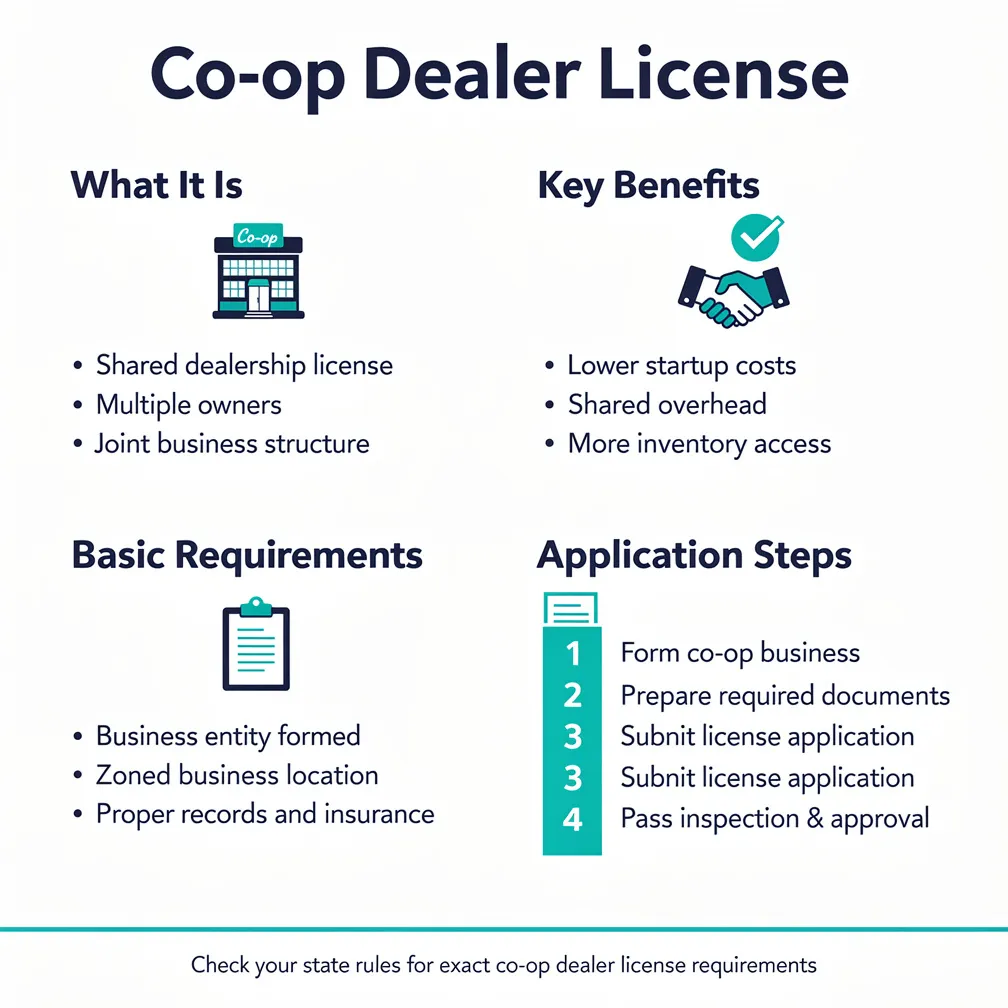
At My Car Dealer License, we specialize in helping aspiring dealers navigate the complex licensing process. Our co-op dealer program provides an affordable alternative for those who want to start buying and selling cars in California without the full overhead of an independent dealership.
Ready to get started? Visit our Getting Started page to learn how we can help you obtain dealer-level access—including auction privileges, dealer plates, insurance, and bonding—at a fraction of the cost of going it alone.
Don’t let California’s strict requirements hold you back from entering this lucrative market. With the right guidance and preparation, you can be buying and selling cars as a licensed dealer in as little as 8 weeks. Contact us today to begin your journey toward your California dealer license.