Breaking into the automotive sales industry in Texas can feel overwhelming, especially when you’re trying to understand the different licensing options available. If you’ve been researching how to become an auto dealer in the Lone Star State, you’ve likely come across the term “co-op dealer license.” This licensing option has become increasingly popular among aspiring dealers who want to enter the car business with reduced overhead and shared resources.
Whether you’re an entrepreneur looking to start your first dealership or someone exploring alternatives to traditional dealer licenses, understanding the co-op dealer license Texas requirements is essential. This comprehensive guide will walk you through everything you need to know about cooperative dealer licenses, from the basic definition to the application process and common pitfalls to avoid.
What Is a Co-Op Dealer License in Texas?
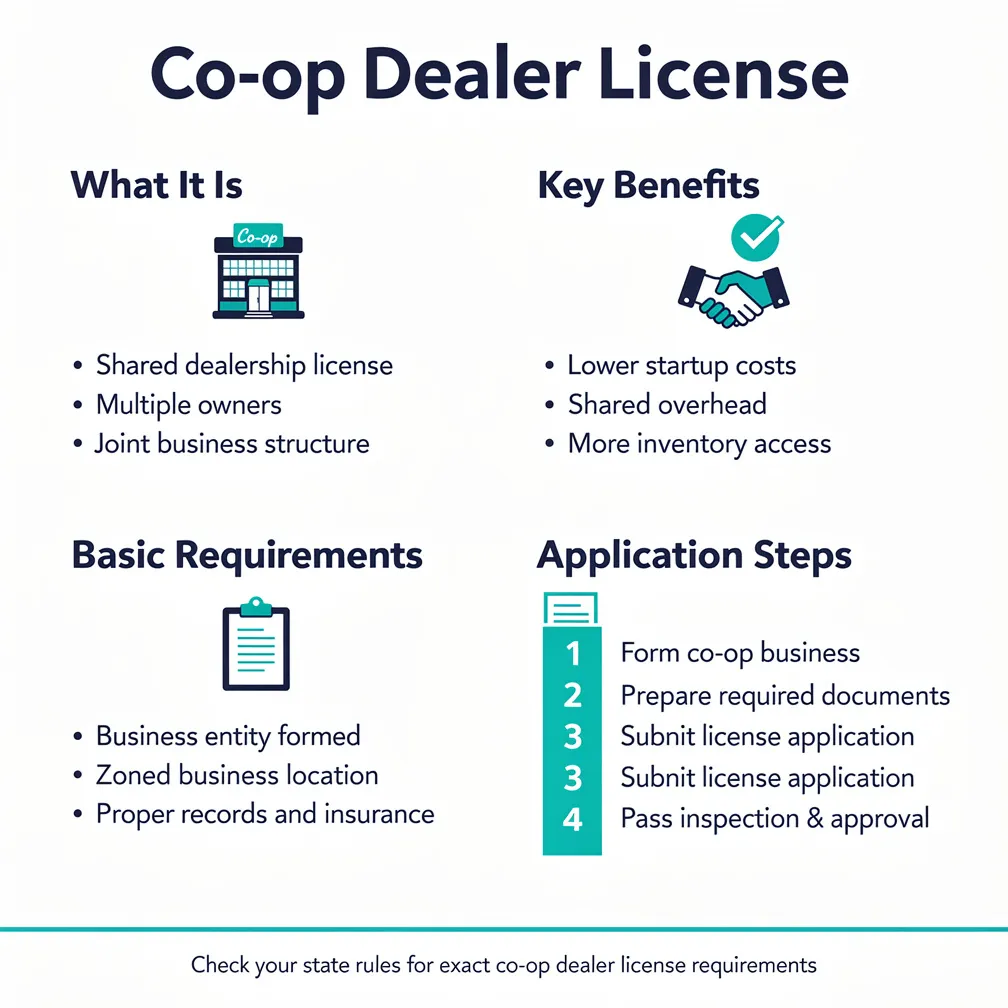
A co-op dealer license Texas arrangement allows multiple individuals or entities to operate under a single dealer license. Rather than each person obtaining their own independent dealer license, participants share one license, splitting the costs and responsibilities associated with running a dealership.
Think of it as a partnership structure specifically designed for automotive sales. The primary license holder maintains the official dealer license with the Texas Department of Motor Vehicles (TxDMV), while co-op members operate under that umbrella license. This arrangement creates opportunities for aspiring dealers who might not have the capital or resources to establish a full dealership independently.
It’s important to understand that a cooperative dealer license Texas isn’t technically a separate license type recognized by the state. Instead, it’s a business arrangement where dealers share facilities, administrative resources, and the primary dealer license. The state issues the license to one entity, and that entity allows others to operate within its framework.
Benefits of Getting a Co-Op Dealer License in Texas
The popularity of co-op dealer arrangements has grown significantly because they offer several compelling advantages for new dealers entering the market.
Reduced Startup Costs
Starting a traditional dealership requires substantial capital investment. You need a physical location, inventory, insurance, and various other expenses. With a co-op arrangement, these costs are distributed among multiple participants, making entry into the business more accessible. You’ll share expenses for the dealership lot, office space, utilities, and administrative staff.
Shared Resources and Expertise
When you join a co-op dealership, you gain access to established systems and experienced professionals. This collaborative environment allows newer dealers to learn from veterans while contributing their own skills and connections. The shared knowledge base can accelerate your learning curve significantly.
Lower Risk Profile
Testing the waters in auto sales through a co-op arrangement means you’re not personally responsible for all the overhead of a full dealership. If the business doesn’t work out as planned, your financial exposure is limited to your share of the cooperative investment rather than the entire dealership operation.
Faster Market Entry
Establishing a dealership from scratch takes considerable time. With a co-op arrangement, you can potentially start selling vehicles much faster since the infrastructure, license, and systems are already in place.
Texas Dealer License Requirements for Co-Op Arrangements
Understanding the Texas dealer license requirements is crucial before pursuing a co-op arrangement. While you’ll be operating under someone else’s primary license, you still need to understand what that license entails.
Primary License Holder Requirements
The entity holding the primary dealer license must meet all standard Texas dealer licensing requirements, including:
- A physical business location that meets TxDMV standards
- Proper zoning approval for automotive sales
- A designated vehicle storage area
- Appropriate signage visible from the street
- A surety bond (typically $25,000 for a general distinguishing number)
- General liability insurance coverage
- A completed dealer license application
- Payment of required fees
Co-Op Participant Requirements
While specific requirements vary by arrangement, co-op participants typically need:
- A written agreement with the primary license holder
- Proof of identity and background clearance
- Sales tax permit from the Texas Comptroller
- Understanding of Texas motor vehicle laws and regulations
- Compliance with the primary dealer’s operational policies
Each participant should also consider obtaining their own business liability insurance, even when operating under a shared license, to protect their personal interests.
How to Get a Co-Op Dealer License in Texas
If you’re wondering how to get a co-op dealer license in Texas, the process involves several important steps. Since you’ll be joining an existing license rather than applying for your own, the path differs from traditional licensing.
Step 1: Research Established Co-Op Dealers
Start by identifying legitimate co-op auto dealer Texas operations. Look for established businesses with good reputations, proper facilities, and transparent business practices. My Car Dealer can help connect you with reputable co-op opportunities that meet state requirements.
Step 2: Evaluate the Agreement
Before committing, carefully review the co-op agreement. Key elements to examine include:
- Monthly or annual fees
- Profit-sharing arrangements
- Use of facilities and resources
- Insurance and liability provisions
- Exit terms and conditions
- Restrictions on vehicle types or sales methods
Consider having an attorney review the agreement before signing.
Step 3: Complete Required Documentation
You’ll need to provide documentation to the primary license holder, which typically includes:
- Valid government-issued identification
- Proof of sales tax permit
- Background check authorization
- Proof of insurance (if required)
- Signed co-op participation agreement
Step 4: Understand Compliance Obligations
Even though you’re operating under another dealer’s license, you must understand and comply with all Texas motor vehicle laws. This includes proper title transfer procedures, disclosure requirements, warranty obligations, and consumer protection laws.
Step 5: Set Up Your Operations
Once accepted into the co-op, establish your operational procedures within the framework provided. This includes setting up your inventory management, customer relationship systems, and financial tracking methods.
Costs Associated with Co-Op Dealer Licenses
Understanding the financial commitment is essential when considering a Texas co-op dealer license arrangement.
Initial Fees
Most co-op arrangements require an initial enrollment or membership fee, which can range from a few hundred to several thousand dollars depending on the operation’s sophistication and location. This fee typically covers administrative costs and your initial setup within their system.
Monthly or Annual Dues
Ongoing participation fees are standard in co-op arrangements. These might be flat monthly fees or based on your sales volume. Expect to pay anywhere from several hundred to over a thousand dollars monthly, depending on the services and facilities provided.
Transaction Fees
Some co-ops charge per-vehicle transaction fees to cover administrative processing, title work, and use of the dealer license for each sale. These fees typically range from $100 to $300 per vehicle.
Additional Costs
Don’t forget to budget for:
- Your own business liability insurance
- Sales tax permit fees
- Marketing and advertising expenses
- Vehicle acquisition costs
- Transportation and reconditioning expenses
Common Mistakes to Avoid
Many aspiring dealers encounter problems when pursuing co-op arrangements. Avoid these common pitfalls:
Not Verifying License Legitimacy
Always verify that the primary dealer holds a current, valid license with the TxDMV. Some fraudulent operations claim to offer co-op arrangements but don’t actually have proper licensing. You can verify dealer licenses through the TxDMV website.
Skipping Legal Review
Never sign a co-op agreement without having it reviewed by an attorney familiar with Texas automotive law. The agreement governs your entire business relationship and protects your interests.
Misunderstanding Liability
Some dealers mistakenly believe that operating under someone else’s license shields them from all liability. In reality, you can still face legal consequences for fraudulent practices, misrepresentation, or violations of consumer protection laws.
Neglecting Your Own Business Structure
Even in a co-op arrangement, you should establish your own business entity (LLC, corporation, etc.) to protect your personal assets and maintain proper accounting separation.
Ignoring Exit Terms
Understand what happens if you want to leave the co-op or if the primary license holder’s license is suspended or revoked. Your agreement should clearly outline these scenarios.
Alternatives to Co-Op Dealer Licenses
While co-op arrangements offer benefits, they’re not the only path into the automotive business. Consider these alternatives:
Independent Dealer License: Obtaining your own dealer license gives you complete control and independence but requires more capital and assumes full responsibility for all aspects of the dealership.
Wholesale Dealer License: If you plan to sell primarily to other dealers rather than retail customers, a wholesale license might be more appropriate and typically has fewer facility requirements.
Broker License: In some cases, becoming a licensed broker who facilitates sales without taking title to vehicles might better suit your business model.
Frequently Asked Questions
Is a co-op dealer license legal in Texas?
Yes, co-op arrangements are legal in Texas as long as the primary license holder has a valid dealer license and all participants comply with state laws. However, the TxDMV doesn’t issue a separate “co-op” license—it’s a business arrangement under a standard dealer license.
How much does a co-op dealer license cost in Texas?
Costs vary significantly by provider but typically include an initial fee of $500-$3,000 and monthly dues of $300-$1,500. Additional per-transaction fees may apply. Always get complete fee disclosure before committing.
Can I sell cars from home with a co-op dealer license?
No. Even with a co-op arrangement, you must operate from the licensed dealer location. Texas law requires dealers to have a physical business location that meets specific requirements. You cannot legally conduct dealer sales from your residence.
What’s the difference between a co-op dealer license and an independent dealer license?
An independent dealer license is issued directly to you or your business entity, giving you complete control. A co-op arrangement means you’re operating under another dealer’s license, sharing their facilities and infrastructure while paying fees for that privilege.
How many cars can I sell with a Texas co-op dealer license?
There’s no specific limit on the number of vehicles you can sell under a co-op arrangement, but your agreement with the primary license holder may impose restrictions. Texas law requires a dealer license if you sell more than five vehicles in a 12-month period.
Do I need my own insurance with a co-op dealer license?
While the primary dealer carries insurance for the dealership, you should obtain your own business liability insurance to protect against claims arising from your specific transactions. Consult with an insurance professional about appropriate coverage.
Taking the Next Step in Your Dealer Journey
A cooperative dealer license Texas arrangement can be an excellent entry point into the automotive sales industry, offering reduced costs and shared resources while you build your business. However, success requires careful due diligence, understanding of state requirements, and selection of a reputable co-op partner.
Before committing to any co-op arrangement, verify the primary dealer’s license status, have all agreements reviewed by legal counsel, and ensure you understand your obligations under Texas motor vehicle laws. The right co-op partnership can provide valuable experience and income while you decide whether to eventually pursue your own independent dealer license.
At My Car Dealer, we understand the complexities of entering the Texas automotive market. Whether you’re exploring co-op opportunities or considering other licensing options, we’re here to provide guidance and connect you with legitimate opportunities that align with your goals. The path to becoming a successful auto dealer starts with making informed decisions—and now you have the knowledge to move forward confidently.