Quick Answer: To get a dealer license in Florida, you must complete FLHSMV’s pre-license dealer training course, secure a $25,000 surety bond, obtain garage liability insurance, establish a business location with proper zoning, and submit your application with a $300 fee to the Florida Department of Highway Safety and Motor Vehicles. The process typically takes 4–8 weeks from start to finish.
If you’re looking to get a dealer license in Florida, you’re entering one of the largest and most active used car markets in the entire United States. Florida registers over 15 million vehicles, ranks third in population, and has year-round demand for pre-owned cars thanks to its tourism, retiree population, and lack of state income tax that attracts new residents every single day.
Whether you want to flip cars as a side business, build a full-scale dealership, or access dealer-only auctions at wholesale prices, a Florida dealer license is your key to doing it legally and profitably. This guide walks you through every step of how to get a dealer license in Florida in 2026 — the requirements, costs, timeline, and a smart alternative if you don’t have your own lot.
Florida Dealer License Requirements
The Florida Department of Highway Safety and Motor Vehicles (FLHSMV) oversees all dealer licensing in the state. Before you can apply, you must meet these Florida auto dealer license requirements:
- Age: Must be at least 18 years old
- Background Check: Clean criminal background — felony convictions related to fraud, theft, or motor vehicles may disqualify you
- Pre-License Education: Complete an approved dealer training course (required before applying)
- Business Entity: Register your business with the Florida Division of Corporations (LLC, Corp, or Sole Proprietorship)
- EIN: Obtain a Federal Employer Identification Number from the IRS
- Business Location: Establish a permanent, properly zoned business location with a display area for vehicles
- Surety Bond: Obtain a $25,000 motor vehicle dealer surety bond
- Garage Liability Insurance: Minimum $25,000 per person / $50,000 per occurrence bodily injury and $10,000 property damage
- Sales Tax Registration: Register with the Florida Department of Revenue for sales tax collection
- Signage: Display your dealership name prominently on your business location
Florida is stricter than many states about the physical location requirement — your lot must have proper zoning approval from your local municipality, and you’ll need to display vehicles during regular business hours.
Types of Florida Dealer Licenses
Florida offers several types of dealer licenses depending on what you plan to sell:
Independent Dealer (Used Motor Vehicle Dealer) — The most common license for selling pre-owned cars. Allows you to buy from auctions, trade-ins, and private sellers, then resell to the public. This is what most people pursuing a dealer license in Florida are after.
Franchise Dealer — Authorized to sell new vehicles from a specific manufacturer. Requires a franchise agreement with the manufacturer and significantly higher capital investment.
Wholesale Dealer — Can only sell vehicles to other licensed dealers, not to the public. Lower overhead since you don’t need a retail display lot, but you’re limited to dealer-to-dealer transactions.
Mobile Home Dealer — Specifically for buying and selling mobile/manufactured homes. Separate requirements and bonding amounts apply.
Auction Dealer — Licensed to operate a motor vehicle auction. This is for running the auction itself, not just buying at one.
For most people reading this guide, the Independent (Used Motor Vehicle) Dealer license is the right choice. It gives you full access to dealer auctions, the ability to sell retail to consumers, and the flexibility to grow your business at your own pace.
How to Get a Dealer License in Florida (Step-by-Step)
Here’s the exact 8-step process to get your Florida dealer license in 2026:
Step 1: Complete the Pre-License Dealer Training Course
Florida requires all new dealer applicants to complete an approved pre-license education course before submitting their application. The course covers Florida motor vehicle laws, title and registration procedures, consumer protection laws, and dealer responsibilities. Courses are available online and typically take 8–16 hours to complete. Cost ranges from $200–$400 depending on the provider.
Step 2: Form Your Business Entity
Register your dealership as a legal business entity with the Florida Division of Corporations at Sunbiz.org. Most dealers choose an LLC for liability protection. You’ll also need to obtain your EIN from the IRS (free, takes 5 minutes online) and register with the Florida Department of Revenue for sales tax purposes.
Step 3: Secure Your Business Location
Find a location that’s properly zoned for motor vehicle sales in your city/county. Your location must have enough space to display vehicles, be accessible during posted business hours, and have your dealership name displayed on permanent signage visible from the road. You’ll need a copy of your lease or deed for the application.
Step 4: Obtain Your $25,000 Surety Bond
Purchase a motor vehicle dealer surety bond from a licensed surety company. The bond protects consumers in case of dealer fraud or failure to transfer titles properly. You don’t pay the full $25,000 — you pay an annual premium typically between $375–$1,500 depending on your credit score. Good credit means lower premiums.
Step 5: Get Garage Liability Insurance
Obtain a garage liability insurance policy that meets Florida’s minimum requirements: $25,000/$50,000 bodily injury and $10,000 property damage. Most dealers opt for higher coverage. Expect to pay $1,200–$3,000 annually depending on your location and number of vehicles.
Step 6: Submit Your HSMV 86056 Application
Complete the HSMV 86056 (Application for Motor Vehicle, Mobile Home, or Recreational Vehicle Dealer License). Submit it to your regional FLHSMV office along with your $300 application fee (non-refundable), proof of surety bond, insurance certificate, lease/deed, business registration documents, pre-license course completion certificate, and a recent photograph.
Step 7: Pass the Location Inspection
After FLHSMV receives your application, they’ll schedule an inspection of your business location. The inspector will verify your signage is displayed, the location is properly zoned, you have adequate display space for vehicles, and your office area is set up for business operations. Make sure everything is ready before the inspection — failed inspections delay the process significantly.
Step 8: Receive Your License and Dealer Plates
Once approved, you’ll receive your official Florida dealer license and can order your dealer plates. You’re now legally authorized to buy and sell motor vehicles in the State of Florida. You can access dealer-only auctions, issue temporary tags, and operate your dealership.
Florida Dealer License Costs
Here’s a complete breakdown of what you’ll spend to get licensed in Florida:
| Expense |
Cost |
| FLHSMV Application Fee |
$300 |
| Pre-License Training Course |
$200–$400 |
| Surety Bond ($25,000 bond) |
$375–$1,500/year |
| Garage Liability Insurance |
$1,200–$3,000/year |
| Business Registration (LLC) |
$125 |
| Lot Lease (if applicable) |
$1,000–$5,000/month |
| Signage |
$200–$1,000 |
| Dealer Plates |
$40.50 each |
| Total First-Year Cost (with lot) |
$15,000–$50,000+ |
The lot lease is by far the biggest expense. It’s also the one you can completely eliminate with the right approach — more on that below.
Florida Dealer License Without a Lot — The Co-Op Alternative
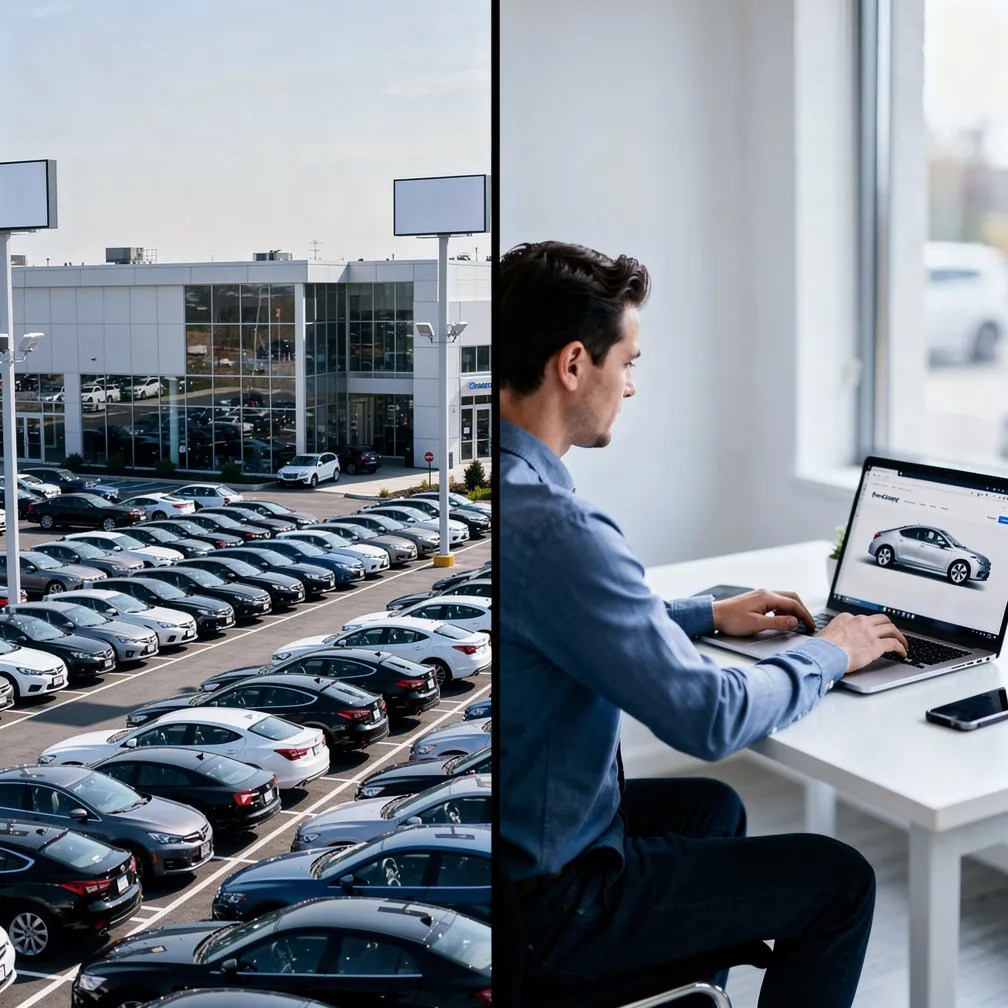
Here’s what most guides won’t tell you: you don’t need to lease your own expensive lot to get a dealer license in Florida.
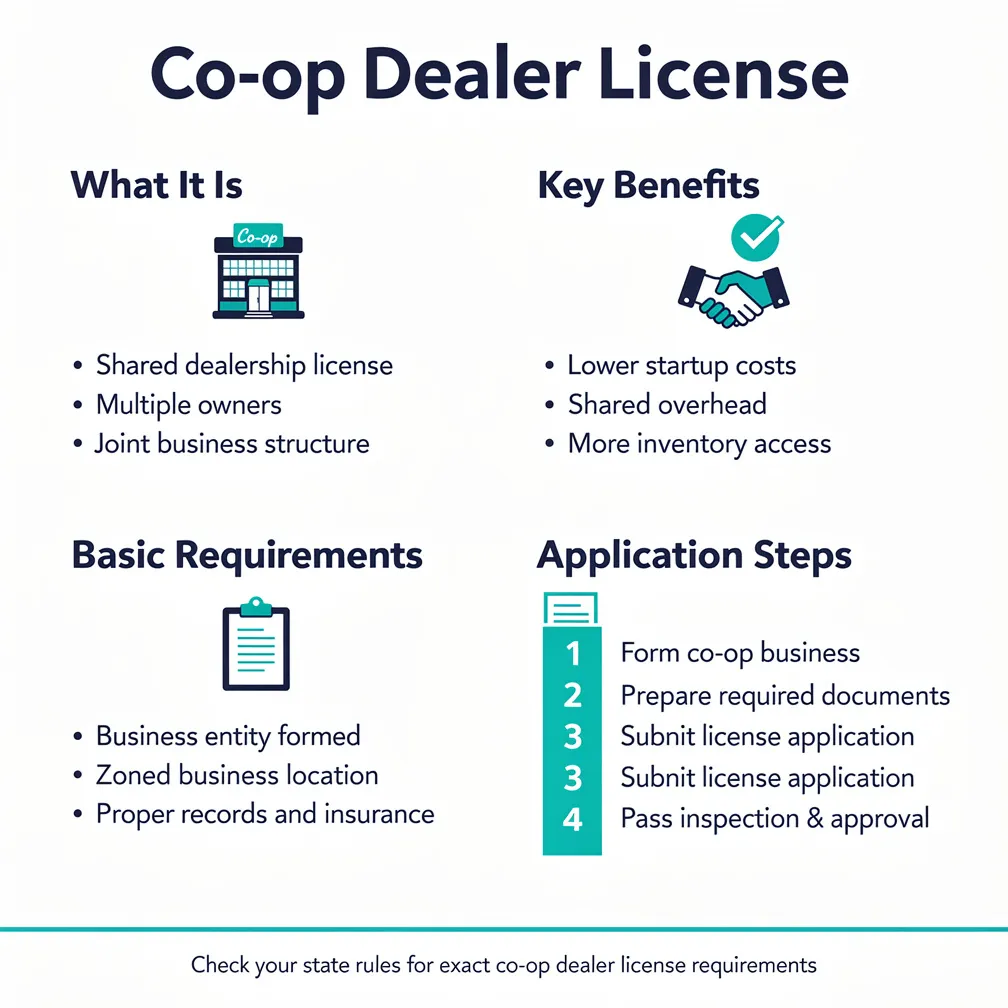
A co-op dealer license program lets you operate under a shared dealership location, eliminating the single largest cost of getting licensed. Instead of paying $1,000–$5,000 per month for your own lot plus signage, zoning, and inspection hassles, you share an existing licensed location with other dealers.
My Car Dealer’s co-op program gives Florida dealers:
- Licensed lot access — Use an already-approved, inspected dealership location
- Full dealer privileges — Access to Manheim, ADESA, and other dealer-only auctions
- No zoning headaches — The location is already zoned and approved by FLHSMV
- Dramatically lower startup costs — Save $12,000–$60,000 in first-year lot expenses
- Ability to issue temporary tags — You operate as a fully licensed dealer
- Flexibility — Sell from home, online, or wherever your customers are
For most people getting into the car business in Florida, the co-op model makes far more financial sense than committing to an expensive lot lease before you’ve sold your first car. You can always transition to your own location once your volume justifies the overhead.
Learn how to get started with My Car Dealer’s Florida co-op program →
Florida Dealer Pre-License Education
Florida is one of the states that requires pre-license education before you can apply for your dealer license. Here’s what you need to know about the training requirement:
What the Course Covers:
- Florida Statutes Chapter 320 (motor vehicle licensing laws)
- Title and registration procedures
- Temporary tag issuance rules
- Consumer protection and disclosure requirements
- Federal odometer disclosure laws
- Dealer record-keeping requirements
- Advertising regulations for dealers
Course Details:
- Duration: Typically 8–16 hours depending on the provider
- Format: Available online or in-person at approved training facilities
- Cost: $200–$400
- Validity: Your completion certificate is valid for 12 months — apply within that window
- Provider: Must be an FLHSMV-approved education provider
Complete this course first. You cannot submit your dealer application without the completion certificate, so getting this done early keeps your timeline on track.
How Long Does the Florida Application Take?
From start to finish, expect the Florida dealer license process to take 4–8 weeks. Here’s a typical timeline:
- Week 1–2: Complete pre-license education, form your LLC, get your EIN
- Week 2–3: Secure your location, obtain surety bond and insurance, get signage installed
- Week 3–4: Submit your completed application to FLHSMV
- Week 4–6: FLHSMV reviews application and schedules location inspection
- Week 6–8: Inspection completed, license issued
Tips to Speed Up the Process:
- Complete your pre-license course first — Don’t wait until everything else is ready
- Have your location ready before applying — Failed inspections add 2–4 weeks to your timeline
- Double-check your application — Incomplete applications get sent back, costing you weeks
- Use a co-op program — Eliminates the time needed to find, lease, and set up a location
- Get your bond and insurance early — These can be obtained in 1–3 business days with good credit
The most common delay is location-related: finding a properly zoned space, getting signage installed, or failing the FLHSMV inspection. Using a co-op program eliminates this entire bottleneck.
Frequently Asked Questions
How many cars can I sell in Florida without a dealer license?
Florida law allows you to sell up to 2 vehicles per year in your own name without a dealer license. Selling 3 or more vehicles in a 12-month period requires a dealer license. Violating this limit is a criminal offense that can result in fines up to $5,000 and up to 5 years in prison.
Can I get a Florida dealer license with a felony?
It depends on the nature of the felony. FLHSMV reviews applications on a case-by-case basis. Felonies involving fraud, theft, motor vehicle crimes, or crimes of moral turpitude are most likely to result in denial. Older felonies with evidence of rehabilitation may be considered more favorably.
Do I need a physical lot for a Florida dealer license?
Yes — Florida requires a physical business location that’s properly zoned for motor vehicle sales. However, you don’t need your own lot. Co-op dealer license programs like My Car Dealer provide shared lot access that satisfies FLHSMV’s location requirement at a fraction of the cost.
How much does a Florida dealer license cost total?
The minimum cost is approximately $2,100–$5,500 for the application fee, pre-license course, surety bond, and insurance — without a lot lease. With your own lot, first-year total costs typically range from $15,000–$50,000+ depending on location and lease rates.
Can I sell cars from home with a Florida dealer license?
Not from a residential address — Florida requires commercial zoning for your dealership location. However, with a co-op program, your licensed location is the shared lot while you handle most of your actual business (finding cars, meeting customers, doing paperwork) from wherever you want, including home.
How do I renew my Florida dealer license?
Florida dealer licenses must be renewed annually. Renewal requires maintaining your surety bond, insurance, and business location. The renewal fee is $300, and you must complete any required continuing education. FLHSMV sends renewal notices approximately 60 days before expiration.
Ready to Get Your Florida Dealer License?
Getting a dealer license in Florida opens the door to one of the most profitable used car markets in the country. Whether you want to flip a few cars per month for extra income or build a full-time dealership business, you now have the complete roadmap.
The smartest move for new Florida dealers? Start with a co-op program to eliminate the biggest startup costs, get licensed faster, and start buying wholesale immediately — then scale into your own lot when the numbers make sense.
My Car Dealer helps Florida residents get their dealer license without the overhead of an expensive lot. You get full dealer privileges, auction access, and the ability to sell vehicles legally — all at a fraction of the traditional startup cost.
Get Started with My Car Dealer in Florida →